
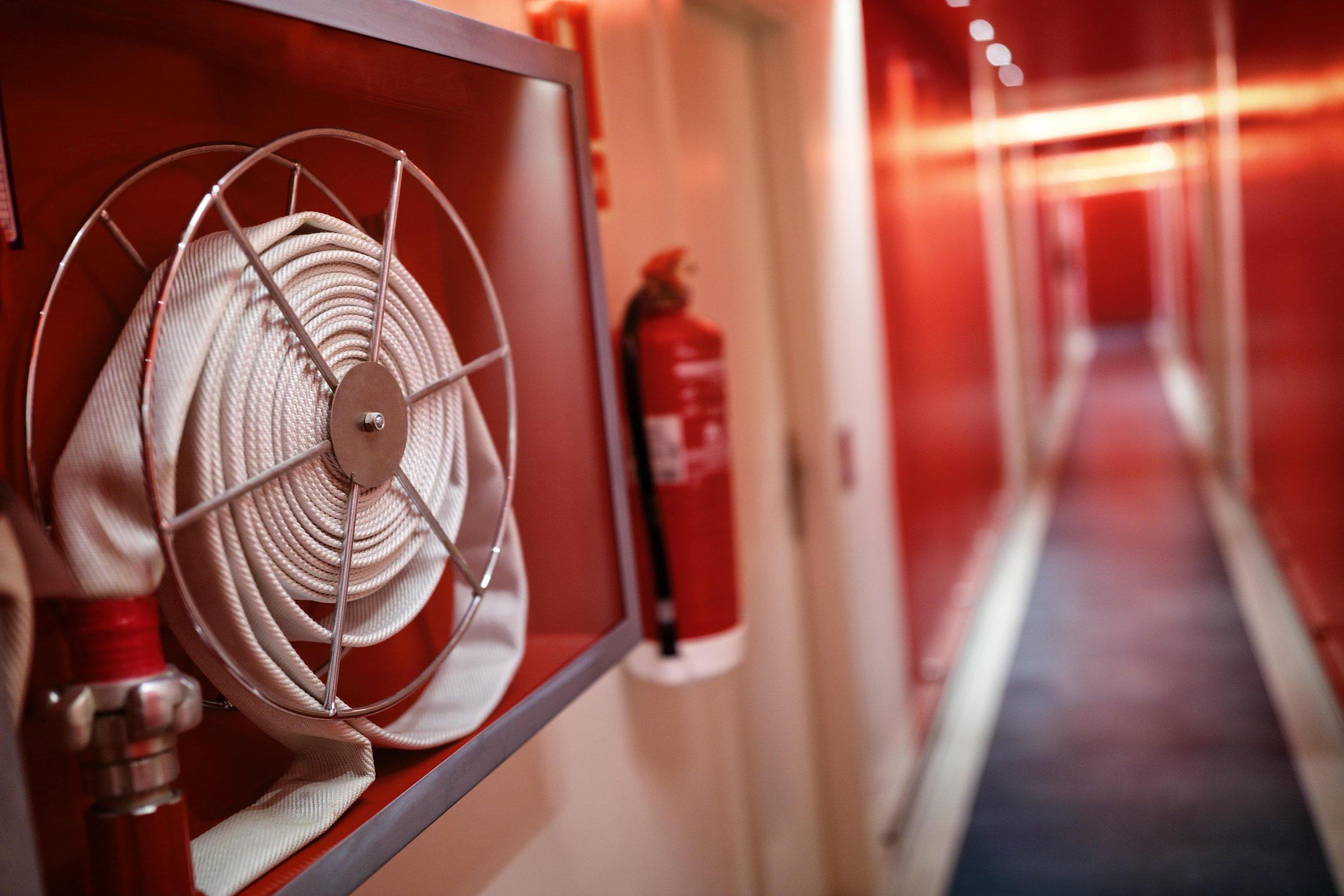
Fire code consulting assesses operational fire safety in existing buildings. The review considers current use, installed systems, maintenance records and outstanding inspection findings. Owners have ongoing obligations after the original occupancy approval.
Building code and fire code reviews answer different questions
A building-code review commonly addresses proposed construction or alterations. A fire-code review addresses matters such as ongoing fire safety, operation, maintenance and the conditions in an occupied building. The scopes can overlap when a renovation changes use, occupant arrangements or fire-protection systems.
The applicable BC Fire Code or local fire bylaw establishes the regulatory basis in British Columbia. For properties in several provinces, local requirements are recorded for each building alongside the owner’s maintenance procedures.
Records used in a fire code review
- Approved drawings, available occupancy records and previous code reports.
- The fire safety plan, emergency procedures and current staff responsibilities.
- Inspection, testing and maintenance records for the building’s systems.
- Previous fire inspection findings, repair records and unresolved deficiencies.
- Details of storage, tenant activities, occupant numbers and recent alterations.
Missing test records are identified separately from observed equipment deficiencies. The resulting action may be to obtain documentation, carry out testing or investigate a physical condition.
Review findings and corrective work
The findings register records location, observed condition, supporting requirement, recommended next step, responsible party and completion evidence. Distinguish urgent safety concerns from items needing further assessment. Immediate hazards should be referred promptly to the responsible building personnel and appropriate emergency or enforcement services.
A recurring obstruction at an exit, for example, may require an operational change as well as removal of the stored material. A recurring system impairment may require coordination among the owner, maintenance contractor and responsible engineer. Treating every item as a one-time repair can miss the underlying cause.
Changes in building use and operations
New tenants, higher storage racks, a different event layout or revised security doors can change the conditions relied on by earlier assessments. A review before the change is implemented can identify the required modifications to protection systems, operating procedures or records.
The owner’s closeout file should show what was corrected, which specialist assessed it and what remains open. Routine equipment testing, a fire code consultant’s assessment and an authority’s inspection have different scopes; one should not be represented as a substitute for all the others.
Noven’s services
For related project support, see our Fire Code Consulting. Request a proposal for your project.
Related Insights
- Occupant Load Analysis: Why Floor Area Is Only the Starting Point
- CAN/ULC-S1001 Testing: Coordinator and Owner Readiness Checklist
Technical references
References reviewed October 23, 2026. Project requirements depend on the applicable code edition, jurisdiction and scope of work.