
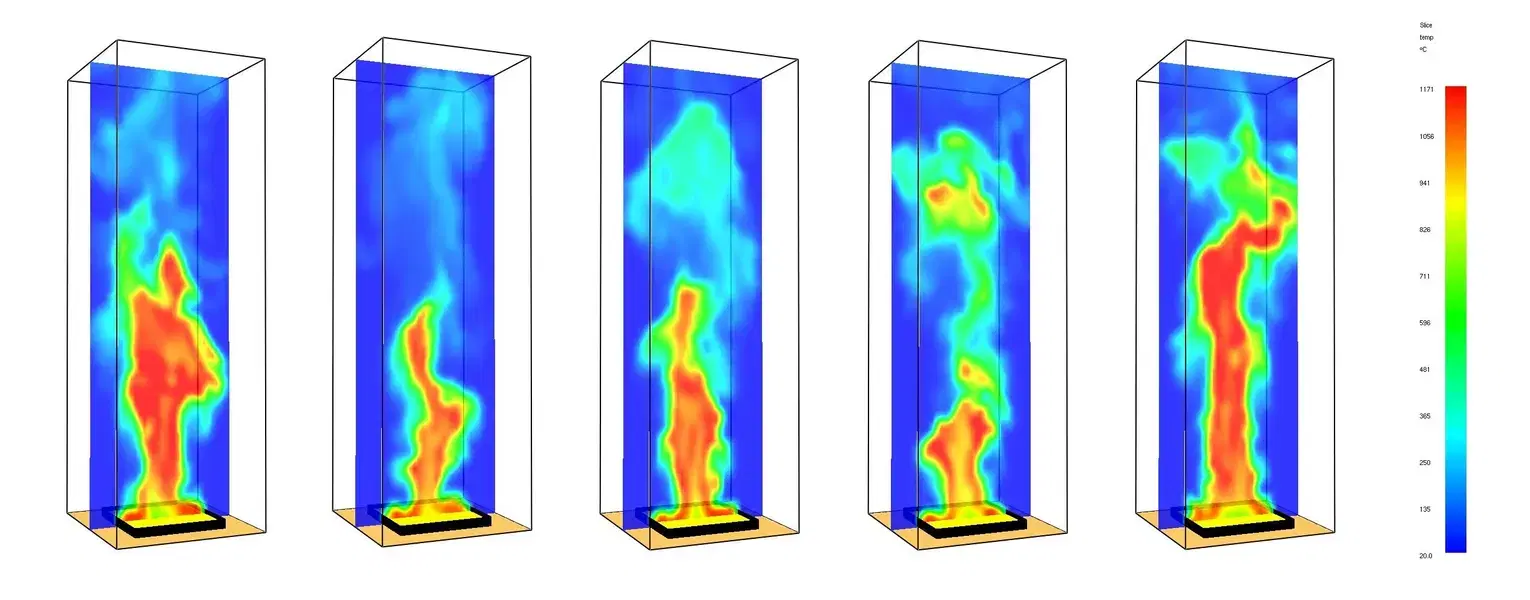
Performance-based fire design uses engineering analysis to assess defined fire-safety objectives. Fire modelling can examine smoke movement, thermal exposure or other conditions relevant to the proposed design. The report sets out the scenarios, assumptions, results and limitations.
Assessment objectives and criteria
The assessment may concern a proposed smoke-control arrangement or the conditions along an evacuation route. Define the relevant scenarios, comparison basis and performance criteria before running the model. Where the analysis supports an alternative solution, coordinate its regulatory basis and authority review separately.
Agree on the inputs that the model will rely on. These may include geometry, ventilation, design-fire assumptions, system responses and building operation. Record which inputs are verified, specified by others or assumptions needing sensitivity analysis.
Verification and validation serve different purposes
NIST publishes technical, verification, validation and user documentation for Fire Dynamics Simulator. Verification concerns whether the mathematical model is implemented and solved appropriately; validation examines comparison with experimental evidence for the phenomena of interest. Neither makes a model automatically suitable for every project.
The analyst needs to explain why the selected methods and available validation evidence are relevant to the question being asked. The project report explains the method’s applicability and the basis of the conclusions.
What should an owner expect in the report?
- A plain-language statement of the design decision and assessment scope.
- Drawings or diagrams defining the model geometry and scenarios.
- The basis for important inputs and boundary conditions.
- An explanation of numerical resolution and appropriate sensitivity checks.
- Results linked to the agreed criteria, with uncertainty and limitations.
- Specific design and operational conditions that must be maintained.
Sensitivity and uncertainty
Sensitivity analysis examines assumptions that materially affect the result, such as system response times, openings or fire characteristics. Cases are selected to represent plausible variations within the assessment scope.
An atrium study may compare ventilation conditions and fire locations. The report explains the selection of these cases, their effect on the results and the conditions outside the assessment. Conclusions are limited to the scenarios and assumptions examined.
Implementation in the building design
Translate the accepted analysis into requirements for the responsible designers, installers and operators. If the analysis relies on a particular system sequence, opening arrangement or material, identify how that condition will be reviewed and maintained. Design changes should trigger a check of the original analysis before its conclusions are reused.
Noven’s services
For related project support, see our Performance Based Design and Fire Modelling. Request a proposal for your project.
Related Insights
- Pedestrian and Evacuation Modelling: Beyond Travel Time
- Building Code Alternative Solutions: Evidence for Approval
Technical references
- NIST: Fire Dynamics Simulator manuals and verification/validation guides
- NIST: Fire Dynamics Simulator Technical Reference Guide
References reviewed October 23, 2026. Project requirements depend on the applicable code edition, jurisdiction and scope of work.