
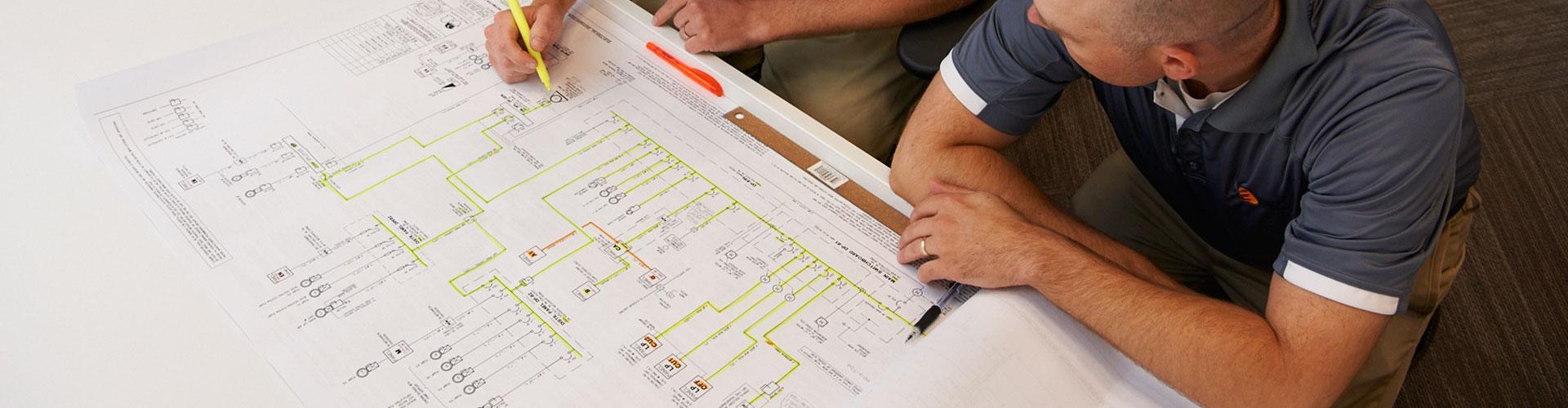
Third-party code review gives an owner, authority or design team an additional assessment of defined work. The appointment identifies the technical questions, reviewer qualifications and procedure for resolving comments.
Types of professional review
EGBC’s Peer Review guidelines distinguish peer review from routine checks, regulatory review, second opinions and other processes. Mandatory independent reviews have their own requirements. The appointment records the review category and applicable obligations.
A review of an alternative solution, for example, differs from a general permit-document review or an investigation of installed work. The scope should state whether the reviewer is assessing technical reasoning, code interpretation, completeness, implementation or another defined issue.
Review documents and limits
- Identify the documents and revisions forming the review package.
- State the governing criteria and the decision the review is intended to support.
- Confirm the reviewer’s relevant competence and any independence requirements.
- Identify information gaps, excluded disciplines and reliance on others.
- Define reporting recipients, response procedures and closeout expectations.
Review comments and responses
A finding should identify the issue, its location in the submitted work and the reason it matters. Separate a request for clarification from a demonstrated technical concern. This helps the originating professional respond directly and avoids treating every comment as the same level of deficiency.
In a fire-modelling review, a comment may address the basis of a design-fire assumption or the sensitivity of the result to that assumption. The response identifies the supporting analysis and any revisions made.
Maintain professional responsibility
External review does not automatically transfer the original designer’s responsibilities to the reviewer. Establish how revised documents will be checked and authenticated and which party is responsible for the final design. The authority’s acceptance process remains a separate matter unless the applicable framework expressly defines otherwise.
Use a response register with document references, the originating professional’s response and the reviewer’s disposition. The register identifies unresolved technical differences as well as closed comments.
Final review record
The final report should identify the work reviewed, important limitations, resolved matters and any outstanding findings. The conclusions reflect the portion of the building and the documents actually reviewed.
For work across Canada, confirm the relevant regulator’s requirements and the local approval process. BC professional guidance is valuable context, but the appointment must fit the jurisdiction and the intended use of the review.
Noven’s services
For related project support, see our Third Party Review. Request a proposal for your project.
Related Insights
- Building Code Alternative Solutions: Evidence for Approval
- Code Compliance Drawings: A Clearer Building Permit Submission
Technical references
- EGBC: Peer Review professional practice guidelines, v1.0 (2022)
- BC: Guide to Letters of Assurance, BCBC 2024 and VBBL 2025
References reviewed October 23, 2026. Project requirements depend on the applicable code edition, jurisdiction and scope of work.